
CRE Debt Service Coverage Ratio Calculator
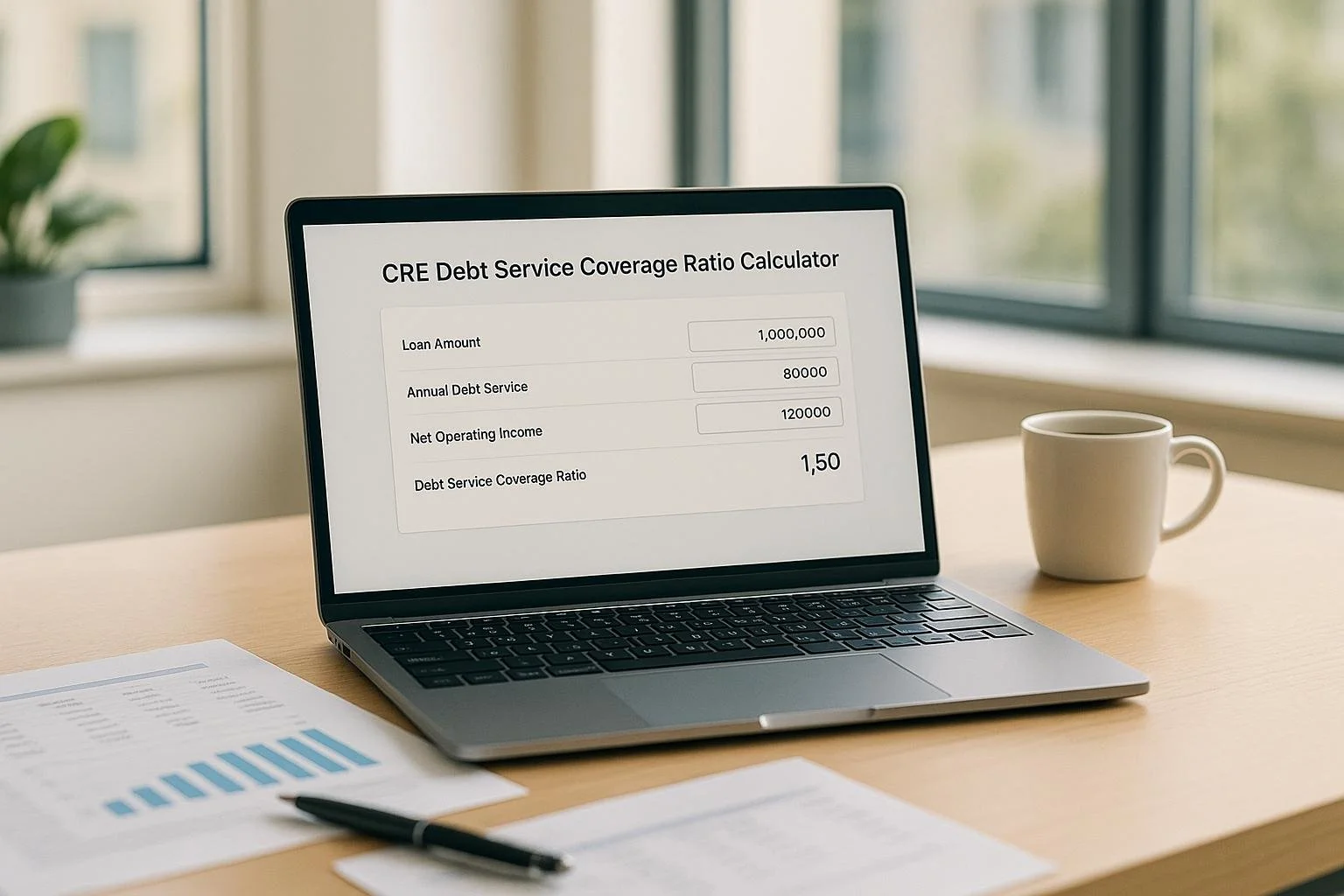
Understanding the Debt Service Coverage Ratio for Commercial Real Estate
When diving into commercial real estate investments, knowing your financial metrics is crucial for making smart decisions. One of the most important figures to track is the ratio that shows whether your property’s income can handle its debt obligations. This number, often used by lenders and investors, acts as a snapshot of a property’s fiscal health. Our free online tool simplifies this process, letting you calculate this key metric in seconds without needing a spreadsheet or financial degree.
Why This Metric Matters
For anyone managing or buying commercial properties, understanding cash flow relative to debt is a game-changer. It helps you see if a building can sustain itself under current loan terms or if adjustments are needed. Beyond just numbers, it’s about peace of mind—knowing your investment isn’t over-leveraged. Plus, lenders often require a specific threshold before approving financing, so having this data at your fingertips can speed up negotiations.
How to Use the Results
Once you’ve got your figure, use it to strategize. A strong ratio might mean room to expand, while a lower one could signal a need to boost income or refinance. Whatever your goal, this insight empowers better planning for your real estate portfolio.
FAQs
What is a Debt Service Coverage Ratio (DSCR) in commercial real estate?
The DSCR is a key metric that measures a property’s ability to cover its debt payments with its income. It’s calculated by dividing your Net Operating Income (NOI) by your Annual Debt Service. A ratio above 1 means your property generates enough income to cover debt, while below 1 signals potential trouble. Lenders often look at this number to assess loan risk, so it’s a critical figure for investors.
What is a good DSCR for commercial properties?
Generally, a DSCR of 1.25 or higher is considered solid for commercial real estate. This means your property’s income is 25% more than needed to cover debt payments, which gives lenders confidence. However, the ideal ratio can vary based on property type, market conditions, and lender requirements. If your ratio is close to or below 1, it might be time to rethink expenses or revenue strategies.
Why does the calculator show an error message?
If you see an error like 'Please provide valid positive numbers for all inputs,' it means something’s off with what you entered. Maybe you left a field blank, typed in a negative number, or used letters instead of digits. Double-check your Net Operating Income and Annual Debt Service values to make sure they’re positive numbers, and try again. This keeps the calculation accurate and meaningful.