
ALTA Surveys vs. Boundary Surveys
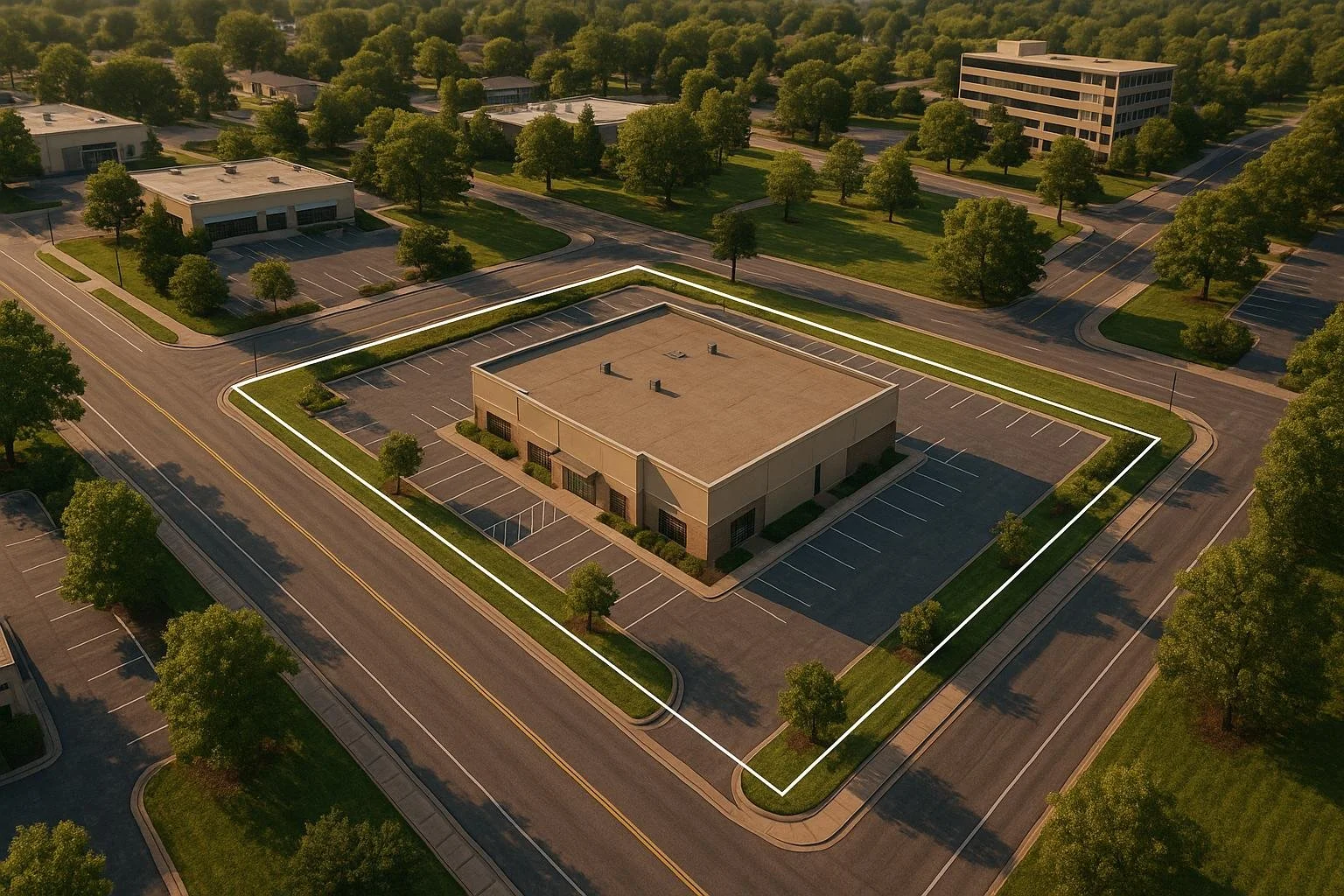
When buying commercial property, knowing what you're purchasing is crucial. Property surveys help by mapping boundaries, identifying features, and ensuring compliance with regulations. Two common types are Boundary Surveys and ALTA Surveys:
Boundary Surveys: Focus on property lines and corners, costing about $500 and taking 2 weeks. Ideal for simple transactions or resolving boundary disputes.
ALTA Surveys: Provide detailed insights, including easements, zoning, utilities, and flood zones. Starting at $2,000, they can take weeks to months and are essential for complex deals involving lenders or title insurers.
Quick Comparison
| Feature | Boundary Survey | Alta Survey |
|---|---|---|
| Scope | Property lines, corners | Property lines + easements, utilities, zoning, etc. |
| Standards | Local regulations | National ALTA/NSPS standards |
| Cost | ~$500 | Starts at ~$2,000 |
| Timeframe | ~2 weeks | Weeks to months |
| Use Cases | Simple transactions | Complex commercial deals |
Choosing the right survey depends on the transaction's complexity. For straightforward deals, a boundary survey works. For transactions involving lenders, title companies, or intricate property details, an ALTA survey is essential.
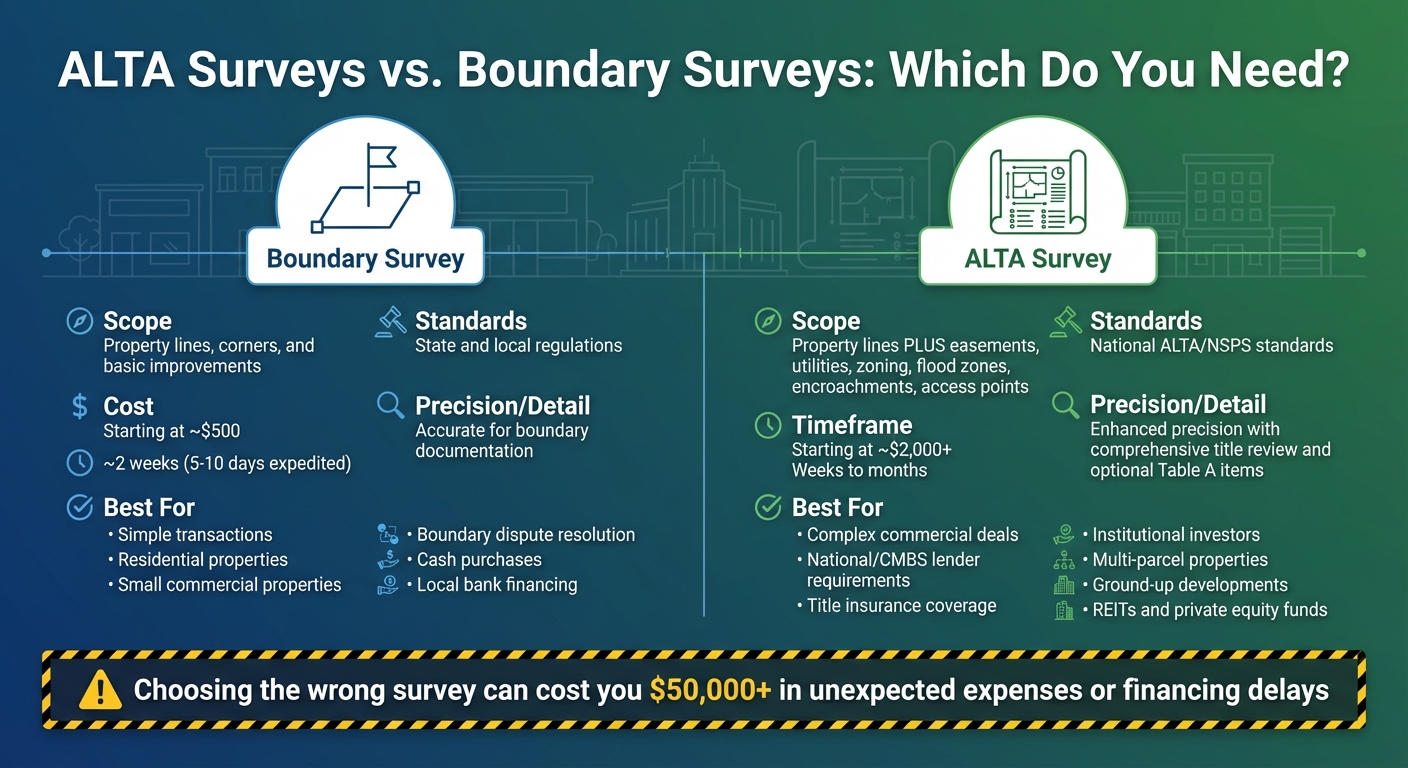
ALTA Survey vs Boundary Survey Comparison Chart
About Land Surveying: What is an ALTA Survey?
What is a Boundary Survey?
A boundary survey is a methodical process used to measure and map the exact boundaries and corners of a parcel of land. This involves using specialized equipment, detailed calculations, legal deed descriptions, and physical evidence like fence lines or property pins to create a clear map of the property. The resulting map highlights the property lines, marks the corners, and notes any basic improvements. However, it doesn’t typically include details about easements, utilities, or zoning regulations.[3][8]
Key Features of Boundary Surveys
Boundary surveys are all about precision. They rely on highly accurate measurements, which are especially important for planning construction or adding improvements to a property. Surveyors document key markers such as corners, monuments, and visible improvements. One critical aspect of these surveys is identifying potential encroachments. For example, a survey might uncover that a fence extends two feet into a neighboring property, allowing the issue to be addressed before a purchase is finalized. Surveyors also update legal property descriptions by comparing existing deed records with evidence collected on-site.
Since boundary surveys are governed by state and local regulations rather than a universal standard, the level of detail can vary depending on the jurisdiction. This makes it crucial to hire a surveyor familiar with local requirements and equipped with precise tools. These surveys are invaluable for resolving disputes and supporting small-scale development projects.
Common Use Cases for Boundary Surveys
Boundary surveys are often used to settle property line disputes by providing clear, documented evidence of where one property ends and another begins. They are also essential for small construction or development projects, ensuring that new structures or additions stay within the correct property boundaries. In residential or small commercial property transactions, a boundary survey can offer the necessary documentation at a typical cost of about $500. The process usually takes around two weeks, though expedited options (5–10 days) are available for an additional fee, making it a practical and affordable way to establish clear property lines.[2][7]
What is an ALTA Survey?
An ALTA survey goes far beyond the basics of a boundary survey. While boundary surveys focus on marking property corners and defining boundaries, ALTA surveys provide a much deeper level of detail. These surveys are conducted according to the Minimum Standard Detail Requirements for ALTA/NSPS Land Title Surveys, which were set by the American Land Title Association (ALTA) and the National Society of Professional Surveyors (NSPS) [4][5]. Because they follow consistent national standards, ALTA surveys are particularly useful for commercial transactions in the U.S. [2][4].
The primary goal of an ALTA survey is to meet the rigorous due diligence needs of lenders, title insurers, investors, and attorneys. They combine accurate boundary measurements with detailed information about title, access, and improvements, all presented on a standardized map [3][4]. This consistency is especially valuable for institutional buyers or deals involving properties across multiple states. Below, we’ll dig into the key features and requirements that make ALTA surveys so essential.
Key Features of ALTA Surveys
ALTA surveys don’t just identify property boundaries - they also document visible improvements and legal details tied to the property. These surveys must show all visible improvements, such as buildings, parking lots, sidewalks, fences, landscaping, and signage, in relation to the property’s boundaries [1][4]. Additionally, they include recorded easements, rights-of-way, and encroachments, as revealed through both a title commitment and the surveyor’s fieldwork. Zoning and setback information is also included to provide a full picture of the property [4][8].
One of the standout features of ALTA surveys is the Table A checklist, which allows clients to customize the survey to their specific needs beyond the standard requirements [1][5]. For example, Table A options might include details like building dimensions, parking space counts, utility locations, topographic information, flood zone data, or setback and height restrictions [1][5]. Lenders and institutional investors often collaborate with their surveyor, legal team, and title company to tailor these options to match the property’s risks and intended use [4][8].
In addition to mapping out the physical and legal aspects of a property, ALTA surveys are tailored to meet the financial and development needs of buyers and stakeholders.
When Are ALTA Surveys Required?
ALTA surveys are typically required for large commercial property transactions, whether the property is office, industrial, retail, or multifamily. They are especially common when national or CMBS lenders are involved, as these lenders often demand the detailed insights an ALTA survey provides [3][4]. Buyers seeking enhanced title insurance coverage - such as removing the general survey exception - will also usually need an ALTA survey [4][8].
For ground-up developments or major redevelopment projects, ALTA surveys are critical. They provide essential information about easements, utilities, and site constraints, which is necessary before obtaining permits or breaking ground on construction [3][4][8]. These surveys also confirm legal access, identify encroachments, and verify zoning compliance [3][4][8].
While ALTA surveys typically start at around $2,000 and can take weeks or even months to complete, their detailed and reliable insights can save significant costs and headaches in high-stakes transactions [2][4].
Transform Your Real Estate Strategy
Access expert financial analysis, custom models, and tailored insights to drive your commercial real estate success. Simplify decision-making with our flexible, scalable solutions.
Key Differences Between ALTA and Boundary Surveys
Scope and Detail Comparison
When comparing survey types, boundary surveys and ALTA surveys serve distinct purposes with varying levels of detail. Boundary surveys focus on identifying property lines and corners, mapping out basic improvements like fences or structures. On the other hand, ALTA surveys go far beyond, offering detailed insights into legal and physical property features. These include easements, encroachments, access points, utilities, zoning setbacks, flood zones, rights-of-way, and more. They also document improvements such as buildings, parking lots, and landscaping in greater depth. Using the optional Table A checklist, ALTA surveys can even include additional elements like topographical details, utility locations, or building square footage [2].
Unlike boundary surveys, which adhere to state and local regulations, ALTA surveys follow national standards established by ALTA/NSPS. This ensures a higher level of precision and consistency, making them particularly valuable for complex real estate transactions. For example, a boundary survey might confirm property lines but overlook unrecorded easements that an ALTA survey would identify. This meticulous approach minimizes lender disputes and facilitates the issuance of title insurance without exceptions.
Comparison Table: ALTA Surveys vs. Boundary Surveys
| Feature | Boundary Survey | Alta Survey |
|---|---|---|
| Scope | Property lines, corners, and basic improvements | Property lines plus easements, utilities, zoning, flood zones, encroachments, and access points |
| Standards | Local regulations | National ALTA/NSPS standards |
| Precision/Detail | Accurate for boundary documentation | Enhanced precision with comprehensive title review and optional items |
| Use Cases | Residential or simple commercial boundary verification | Complex commercial transactions, title insurance, and lender-financing requirements |
| Cost | Typically starts at about $500 | Typically starts at around $2,000 or more |
| Timeframe | Around 2 weeks (faster with expedited service) | Several weeks to months, reflecting the depth of research |
While ALTA surveys demand more time and come at a higher cost, their detailed insights are critical for high-stakes property transactions. They provide the thoroughness needed to address legal and financial complexities, making them indispensable for commercial real estate.
Choosing the Right Survey for CRE Transactions
In commercial real estate (CRE) transactions, picking the right survey type is all about balancing deal complexity, lender requirements, and the need for thorough risk assessment during due diligence. Knowing which survey works best for your specific situation helps you save time and money while meeting everyone’s expectations.
When to Use Boundary Surveys
Boundary surveys are a practical choice for straightforward transactions where confirming property lines is the main goal. They’re especially useful for smaller commercial properties like local retail pads, single-tenant offices, or small warehouses. In cases where purchases are made with cash or financed through local banks with minimal leverage, a boundary survey can provide enough clarity to avoid disputes over encroachments and support simple improvements like fencing or parking lot re-striping[2][3].
These surveys are also a good fit for residential and smaller mixed-use properties, where the focus is on lot size, setbacks, and potential boundary issues with neighbors[3][4]. For example, if you’re planning a small addition, a boundary survey can confirm setback compliance without the higher expense of an ALTA survey[1][3].
The biggest advantages? They’re quicker and more affordable. This makes them ideal for lower-value transactions where national survey standards aren’t required, and where easements or title exceptions aren’t a major concern. However, for deals with more complex risk factors, the detailed documentation provided by an ALTA survey is often necessary.
When to Use ALTA Surveys
For transactions involving national lenders, title companies, or institutional investors, ALTA surveys are often a must. These surveys ensure that the property is accurately described and free from hidden encumbrances, access issues, or encroachments. Title companies rely on ALTA surveys to evaluate recorded easements, rights-of-way, and other title exceptions, often tying insurance coverage or endorsements to the survey findings[3][4][5][6].
ALTA surveys are particularly important for institutional-grade assets or portfolio deals, such as those involving REITs or private equity funds. They provide a consistent framework for managing risk across multiple markets[7][4]. For more complex properties - think multi-parcel assemblages, shopping centers with shared parking, industrial parks, or sites with intricate utility and access easements - the comprehensive details captured in an ALTA survey are essential[1][7][4][6].
These surveys are also frequently required for ground leases and build-to-suit deals, both at the lease stage and after construction, to confirm building placement, parking availability, and compliance with lease terms[7][5].
Keep in mind that ALTA surveys come with higher costs and longer timelines due to their thoroughness and adherence to national standards. For financed or intricate transactions, it’s smart to order the ALTA survey as soon as you receive the title commitment. This gives lenders and attorneys enough time to review the findings and address any issues before closing[5][6].
Conclusion
Selecting the right survey depends on how complex your transaction is. Boundary surveys are a practical choice when you need to confirm property lines quickly and affordably. They’re perfect for simpler transactions, like cash purchases of smaller properties, basic site improvements, or situations where addressing potential encroachments is your primary concern. On the other hand, ALTA surveys go much deeper, uncovering details about easements, access issues, zoning, utilities, flood zones, and encroachments. These are essential for institutional transactions, multi-parcel deals, or any situation where unresolved title issues could disrupt closing. This distinction builds on the comparisons discussed earlier.
It’s worth noting that boundary surveys might miss key details, such as easements or utility encroachments, which could lead to unexpected costs - sometimes exceeding $50,000 - delays in financing, or even adjustments to the deal itself [1]. While boundary surveys are great for straightforward needs, ALTA surveys address more complex issues, combining title examinations to provide lenders and buyers with greater confidence. Choosing the right survey is a critical step in protecting the integrity and value of your commercial real estate investment.
Key Takeaways
The survey you choose should align with the specific needs and risks of your transaction.
For low-risk, straightforward deals where confirming property boundaries is enough, a boundary survey will do the job. However, if lenders, title insurers, or institutional buyers are involved - or if the property has complicated easements, multiple access points, or zoning challenges - an ALTA survey is the better option.
To avoid surprises, discuss your survey needs early with your lender, title company, attorney, and surveyor. This ensures the survey scope matches your due diligence timeline, helping you sidestep potential issues and close smoothly.
FAQs
-
When choosing between a Boundary Survey and an ALTA Survey, it comes down to the purpose and the amount of detail you need. A Boundary Survey is perfect for pinpointing property lines, often used in residential settings or smaller transactions. It’s straightforward and focuses on defining the edges of a property.
An ALTA Survey, however, goes much deeper. It not only outlines property boundaries but also includes details like improvements, easements, and other essential elements. This level of detail is crucial for commercial real estate deals, particularly when title insurance or lender requirements are part of the equation.
In short, for commercial projects, ALTA Surveys are typically a must to satisfy lender and insurer demands. Boundary Surveys, on the other hand, work well for simpler property boundary needs.
-
ALTA surveys take more time and money because they dive deeper into the details compared to boundary surveys. While boundary surveys focus strictly on marking property lines, ALTA surveys go further by incorporating title reviews, legal descriptions, easements, encroachments, and zoning information. These surveys follow the stringent standards set by the American Land Title Association, making them a critical part of commercial real estate transactions.
This level of thoroughness requires specialized expertise, additional time, and more resources, which naturally increases the cost and timeline. Even so, ALTA surveys are often a must-have for ensuring precision and reducing risks in property deals.
-
An ALTA Survey delivers a detailed and standardized examination of a property's boundaries, easements, improvements, and other important features. This information ensures that everyone involved has a clear and consistent understanding of the property's legal and physical attributes.
By identifying potential boundary issues and outlining property conditions early on, an ALTA Survey minimizes risks and helps streamline negotiations. It's a crucial resource, especially in complex commercial real estate deals.