
How to Be Successful in Commercial Real Estate: Choosing the Right Career Path for Your Strengths
We’re going to take a step back from the data today and talk more about the roles available in the commercial real estate (CRE) industry. CRE is more than just buying and selling buildings—it's a sophisticated, multi-trillion-dollar industry with diverse career paths that touch finance, development, sales, operations, and strategy. Whether you're driven by spreadsheets, relationships, negotiations, or design, there's a CRE career path tailored to your strengths.
If you’re mature in your career, consider sharing this article with someone earlier on. It may have a bigger impact on them than you could ever know.
This comprehensive guide explores how to succeed in commercial real estate by understanding the various roles available, how to enter them, and what skills or traits are essential at every stage. By the end, you'll have a clear picture of which CRE track aligns with your personality, interests, and long-term goals.
What is Commercial Real Estate (CRE)?
CRE refers to real estate used exclusively for business purposes. This includes office buildings, industrial facilities, retail spaces, multi-family apartment complexes (over 5 units), hotels, and special-use properties. CRE differs from residential real estate in its capital structure, complexity, transaction size, and stakeholder involvement.
Success in CRE means knowing how to navigate large transactions, manage financial risk, build lasting relationships, and identify undervalued or opportunistic assets. But how you do that depends greatly on your role within the ecosystem.
Career Paths in Commercial Real Estate
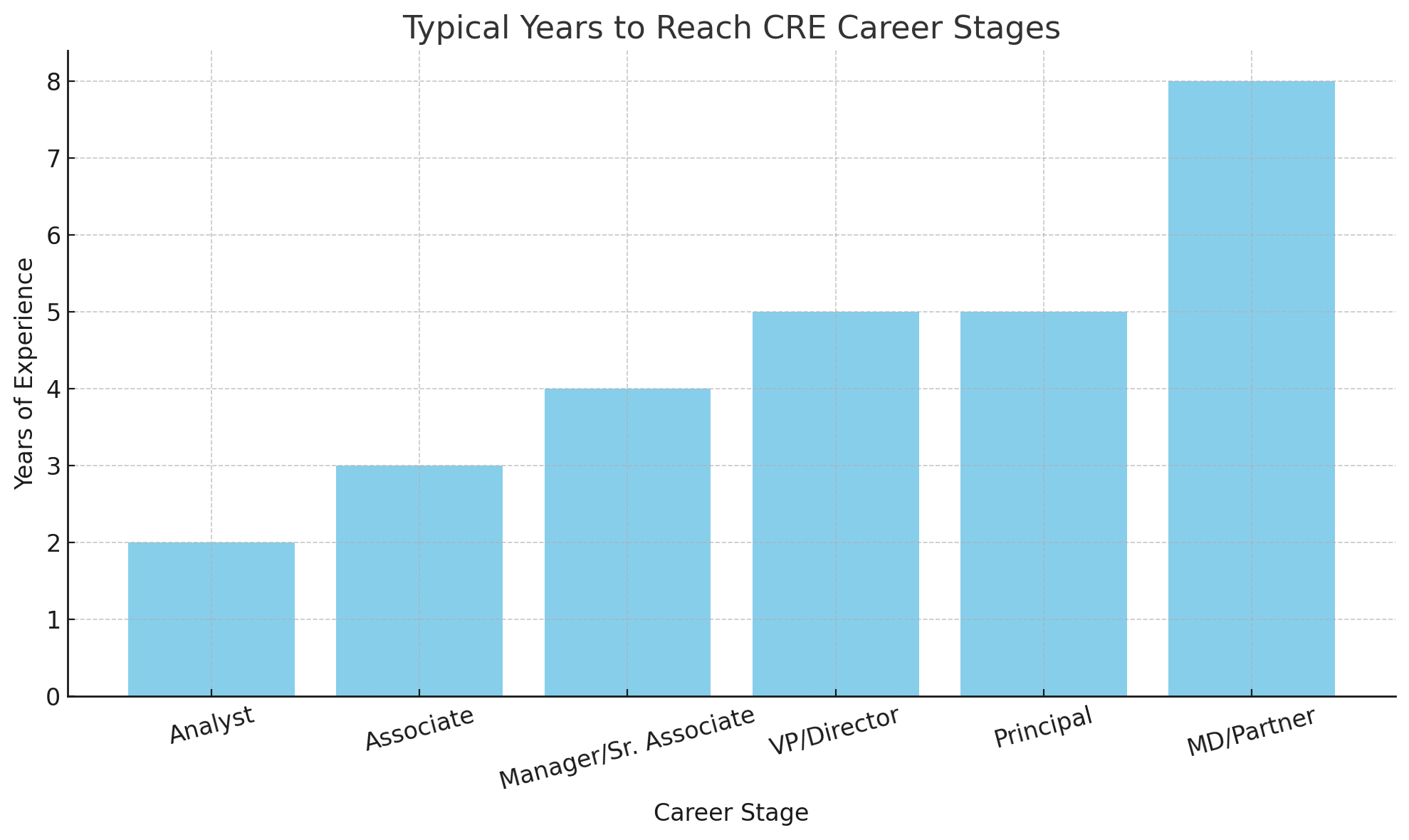
Most CRE career tracks follow a progression from analyst to partner-level roles. While timelines vary, the general structure is as follows:
Analyst (0–2 years) – Execution and support
Associate (2–5 years) – Independent deal work, coordination
Manager / Senior Associate (4–8 years) – Leading smaller deals, junior mentorship
Vice President / Director (7–12 years) – Leading deals, client relationships
Senior Director / Principal (10–15+ years) – Strategic planning, oversight
Managing Director / Partner (12–20+ years) – Firm leadership, equity ownership, P&L responsibility
Depending on your interests and personality, the following five paths offer distinct ways to break into and ascend the CRE world.
1. Acquisitions: The Investment Strategist
If you're analytical, detail-oriented, and interested in evaluating deals, acquisitions could be your niche.



What You Do
Acquisitions professionals work for REITs, real estate private equity firms, developers, or investment funds. Their job is to:
Source potential acquisitions
Build financial models to assess feasibility
Conduct due diligence
Present investment memos to internal committees
Negotiate purchase terms
Career Progression
Analyst (0–2 years): Financial modeling, market research, memos, due diligence support
Associate (2–5 years): Underwriting ownership, deal support, stakeholder communication
VP/Director (7–12 years): Lead deals, negotiate terms, manage broker and lender relationships
Managing Director/Partner (12+ years): Raise capital, oversee team, drive investment strategy【5†source】
Ideal Traits
Financial acumen
Risk assessment capability
Strong written communication (for memos and presentations)
Relationship-building with brokers and capital partners
Entry Points
Finance, economics, or real estate degree
Internships in private equity, REITs, investment banking
Excel modeling and ARGUS proficiency
2. Investment Sales: The Rainmaker
Do you thrive in high-stakes, commission-driven environments? Are you a persuasive communicator with relentless drive? Then investment sales might be for you.



What You Do
Working for brokerages like CBRE, JLL, or Cushman & Wakefield, investment sales professionals:
Market commercial properties for sale
Build relationships with buyers and sellers
Negotiate transaction terms
Conduct valuations and create offering memorandums
Earn commissions based on closed deals
Career Progression
Analyst (0–2 years): Create financial models, offering memos, market comps
Associate Broker (2–5 years): Prospecting, cold calling, marketing support
VP/Senior Broker (5–12 years): Lead listings, manage clients, specialize in asset types
Managing Director/Partner (10–20+ years): Oversee large portfolios, build brand, recruit junior talent【5†source】
Ideal Traits
Charisma and salesmanship
High tolerance for rejection
Ability to build rapport quickly
Knowledge of local markets
Entry Points
Bachelor's degree in business, marketing, or real estate
Sales experience is a plus
Real estate license often required
Transform Your Real Estate Strategy
Access expert financial analysis, custom models, and tailored insights to drive your commercial real estate success. Simplify decision-making with our flexible, scalable solutions.
3. Leasing: The Matchmaker
If you like working with people and facilitating long-term solutions, leasing offers a consultative, relationship-oriented role.



What You Do
Leasing professionals work either on the landlord side (helping owners lease space) or tenant rep side (helping companies find office/retail/industrial space). Daily responsibilities include:
Touring properties with clients
Negotiating lease terms
Conducting market analysis
Coordinating with brokers, attorneys, and asset managers
Career Progression
Analyst/Coordinator (0–2 years): Market surveys, tour coordination, marketing support
Associate Broker (2–5 years): Assist lease negotiations, manage client communication
VP/Senior Associate (5–12 years): Lead lease negotiations, manage portfolios
Principal/Managing Director (12+ years): Top producer, manage teams, specialize by sector【5†source】
Ideal Traits
Strong interpersonal and communication skills
Detail orientation for lease language
Market knowledge
Negotiation and time management skills
Entry Points
Entry-level roles at brokerages or leasing teams
Degrees in real estate, business, or communications
Real estate license is often mandatory
4. Development: The Visionary Builder
Development is the path for those who enjoy managing complexity, overseeing construction, and bringing ideas to life.



What You Do
Development professionals guide projects from concept to completion. That includes:
Site selection and feasibility
Zoning and entitlement work
Financial modeling and budgeting
Construction oversight
Managing architects, engineers, GCs, and consultants
Career Progression
Development Analyst (0–2 years): Financial modeling, feasibility, zoning research
Development Associate (2–5 years): Manage timelines, budgets, and scopes
Development Manager/Director (6–12 years): Run $20M+ projects, oversee city approvals and consultants
Managing Director (12+ years): Source land, raise capital, oversee large-scale pipelines【5†source】
Ideal Traits
Project management mindset
Strong interpersonal and technical coordination
Risk management
Creativity and patience
Entry Points
Real estate, urban planning, or construction degrees
Construction or architecture internships
Certifications like PMP or MSRED can be valuable
5. Lending: The Capital Allocator
If you're financially savvy and enjoy managing risk, lending roles may be your calling.



What You Do
Lenders provide the capital needed for acquisitions and developments. You’ll:
Underwrite loans
Conduct borrower due diligence
Prepare credit memos
Structure loan terms
Monitor portfolio risk
Career Progression
Analyst (0–2 years): Underwriting, memo prep, research, borrower support
Associate/Underwriter (2–5 years): Structure terms, manage borrower relations
VP/Senior Underwriter (5–10 years): Approve loans, mentor juniors, manage risk
Director/Managing Director (10–20+ years): Originate large loans, manage credit policy, lead lending team【5†source】
Ideal Traits
Quantitative ability
Analytical mindset
Risk awareness
Relationship management with borrowers and brokers
Entry Points
Finance, accounting, or economics degree
Banking internships or analyst programs
Excel and ARGUS proficiency
Key Skills Required Across All CRE Careers
| Skill | Application |
|---|---|
| Financial Modeling | Acquisitions, development, lending |
| Market Analysis | All roles |
| Relationship Building | Brokerage, acquisitions, lending |
| Communication | Memos, client meetings, negotiations |
| Negotiation | Leasing, investment sales, acquisitions |
| Project Management | Development, leasing |
| Entrepreneurial Drive | Especially brokerage and capital-raising roles |
As we review all of these skills, you have to be a well-rounded professional to succeed in the CRE industry.
Common Certifications and Degrees
ARGUS Certification: Industry standard for cash flow modeling
Real Estate License: Required for leasing and brokerage roles
MBA: Helpful for senior roles in acquisitions, development, or strategy
MSRED (Master of Real Estate Development): Ideal for development-focused careers
CFA: Rare but valued in institutional acquisitions or lending
PMP or Construction Certs: Useful in development and project management
How to Choose the Right Path for You
Here’s a personality-to-path alignment table to help you identify your best fit:
Personality Type Best-Fit CRE Career Path Analytical + Risk-Averse Lending, Acquisitions Visionary + Detail-Oriented Development Outgoing + Competitive Investment Sales, Leasing Collaborative + Strategic Asset Management, Leasing Creative + Process-Driven Development, Marketing
Final Thoughts: Your Roadmap to CRE Success
No matter your background, there's a path in commercial real estate that fits your strengths. The key is to:
Choose a path aligned with your interests.
Build technical and interpersonal skills early.
Find mentors and seek hands-on experience.
Stay updated on industry trends and market cycles.
Keep a long-term mindset for growth and learning.
Commercial real estate isn’t just a career—it's a journey filled with deals, relationships, and value creation. Whether you become a rainmaker, a strategist, a builder, or a financier, your success will depend on aligning your strengths with the right role.