
ALTA 17.2 vs Easement Endorsements
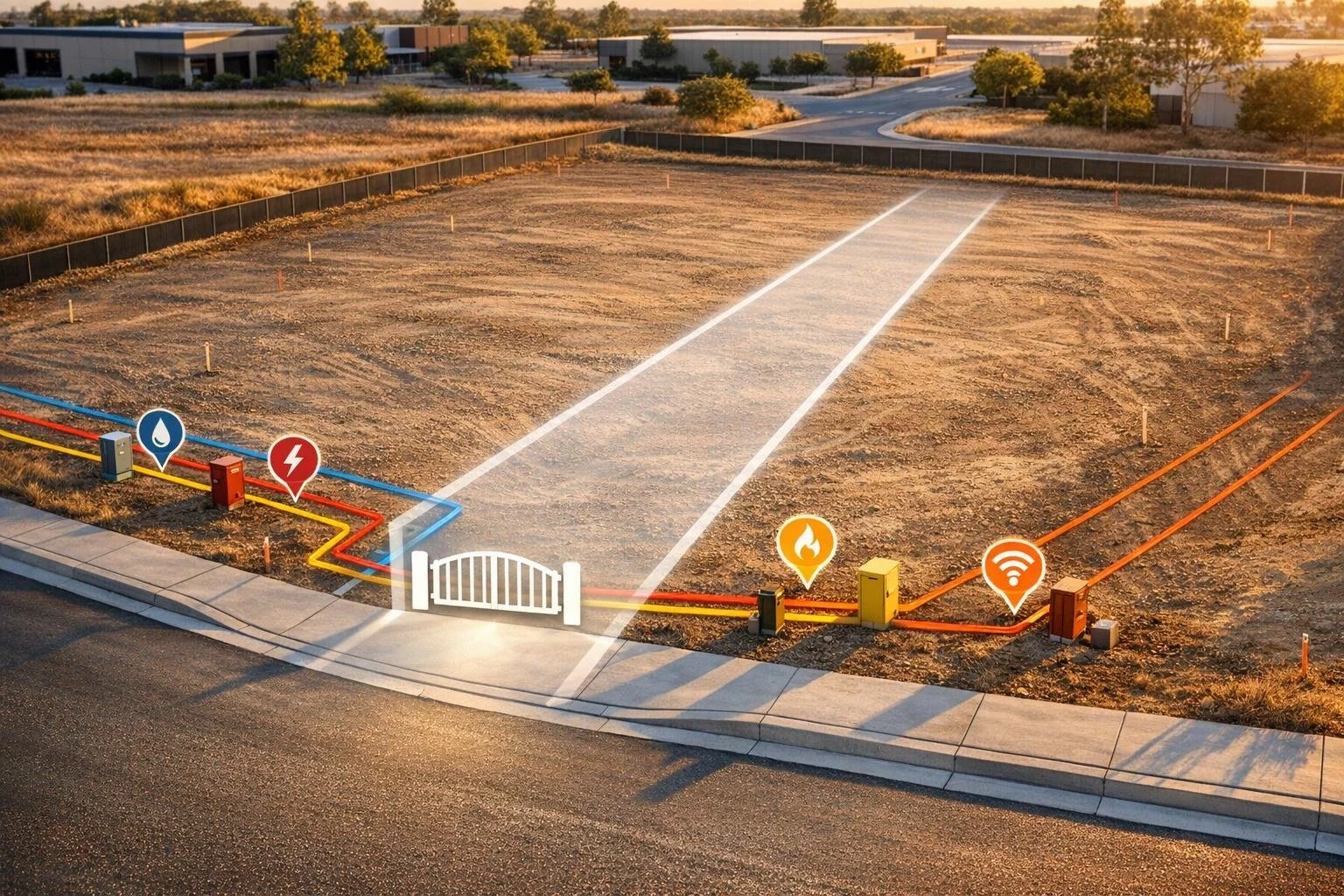
When dealing with commercial real estate, ALTA 17.2-06 Utility Access Endorsement and easement endorsements like ALTA 17.1-06 address different access-related risks:
- ALTA 17.2-06: Protects against losses due to lack of legal utility access (e.g., water, gas, electricity) via rights-of-way or easements. It focuses on ensuring the legal right to connect to utilities, not the physical presence of infrastructure.
- Easement Endorsements: Ensure the legal validity and enforceability of recorded easements (e.g., access roads, utility paths). They confirm the easement’s legal standing and protect against defects or encroachments.
Quick Comparison
| Feature | ALTA 17.2-06 (Utility Access) | Easement Endorsements (e.g., ALTA 17.1-06) |
|---|---|---|
| Focus | Legal access to utilities | Legal validity of recorded easements |
| Key Risk Covered | Gaps between property and utilities | Invalid or defective easements |
| Policy Type | Loan Policies only | Loan and Owner Policies |
| Physical Infrastructure | No guarantee utilities exist | Ensures easement usability |
| Best For | New developments, vacant land | Improved properties with recorded easements |
ALTA 17.2-06 is ideal for new developments or vacant land to secure utility access rights. Easement endorsements are better for properties with existing easements, ensuring long-term access and legal clarity. Always review your title report and survey with a title underwriter to choose the right endorsement for your property.
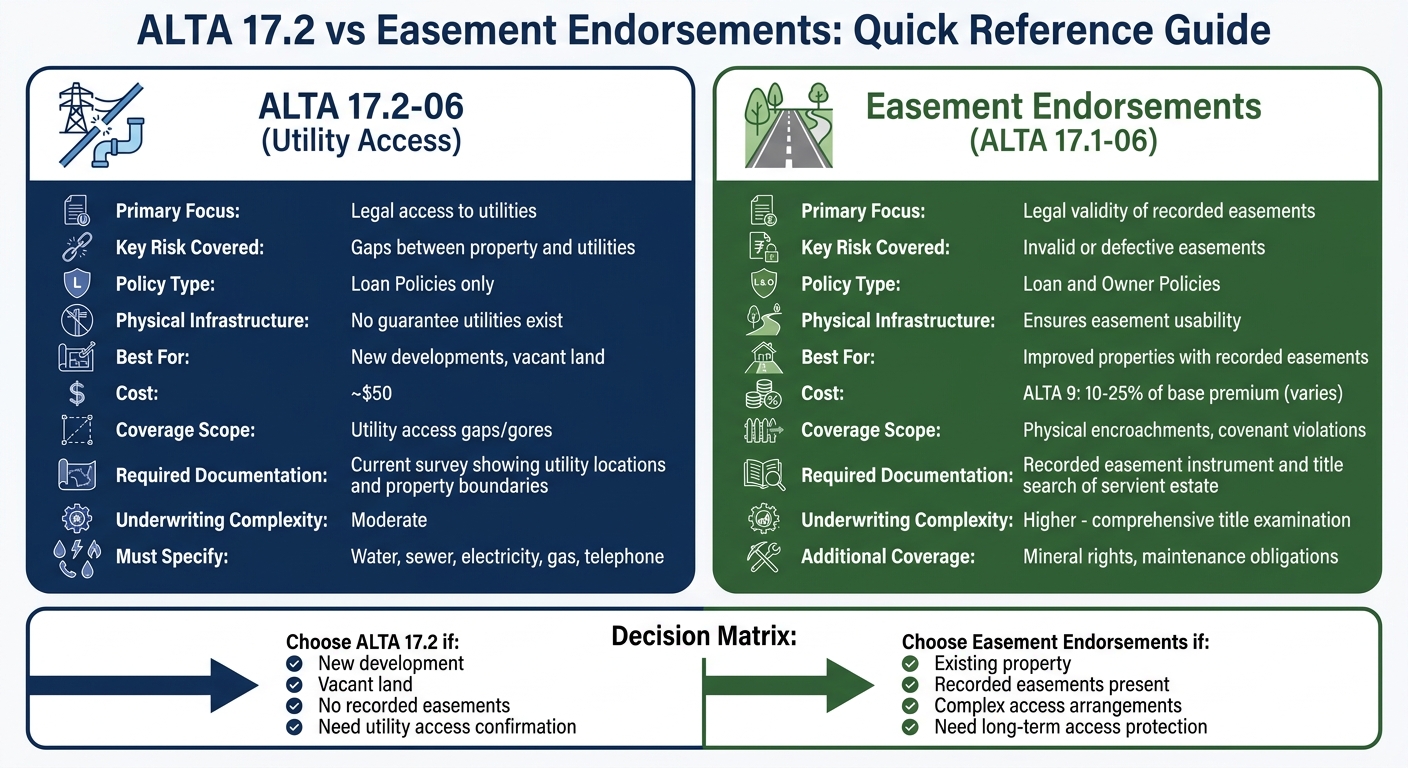
ALTA 17.2 vs Easement Endorsements Comparison Chart for Commercial Real Estate
Coverage Differences
ALTA 17.2 Utility Access Coverage
The ALTA 17.2-06 endorsement ensures the legal right to connect to essential utilities like water, electricity, gas, telephone, sanitary sewer, or storm water drainage. However, it doesn't guarantee that the physical infrastructure for these utilities exists. Its primary focus is on protecting against the absence of a legal right to access these services[1][3].
One significant feature is its protection against misalignments between property boundaries and utility easements. These misalignments can result in a property lacking legal access to utilities, even when the infrastructure is physically present[4].
Easement Endorsements Coverage
Easement endorsements differ by focusing on the enforceability of recorded easements. For example, the ALTA 17.1-06 endorsement ensures the legal validity and enforceability of a specific recorded easement. It protects against risks such as a recorded easement shown on Schedule A being later deemed invalid or subject to title defects[2]. This endorsement relies on a thorough title examination of the servient estate to confirm the easement's legal standing.
While ALTA 17.2 addresses the right to connect to utilities, easement endorsements are centered on ensuring that the recorded easement itself is legally sound and enforceable.
Coverage Scope Comparison
The table below highlights the key differences between the two endorsements:
| Feature | ALTA 17.2 (Utility Access) | Easement Endorsements (e.g., ALTA 17.1) |
|---|---|---|
| Primary Focus | Legal access to specific utility services (e.g., water, sewer, gas)[4] | Legal validity and enforceability of a recorded easement[2] |
| Key Risk Covered | Gaps or misalignments between property boundaries and utility easements/facilities[1][3] | Risks of invalid easements or title defects[2] |
| Policy Type | Typically limited to Loan Policies[4] | Available for both Owner's and Loan Policies[4] |
| Verification | Based on surveys, maps, or affidavits[4] | Requires title examination of the servient estate to check for limitations or obligations[4] |
| Infrastructure | Covers the right of access but not the physical presence of utilities[4] | Protects the legal right to use the easement for its intended purpose |
sbb-itb-df8a938
Common Endorsements in Commercial Transactions
Issuance Requirements and Standards
To manage CRE title risks effectively, it's essential to understand the underwriting requirements for different endorsements. The documentation and examination standards vary significantly between these endorsements.
ALTA 17.2 Requirements
The ALTA 17.2 endorsement involves detailed documentation and underwriting steps. First, the title company needs a specific list of utilities you want coverage for - such as water, sewer, electricity, gas, or telephone. Each utility must be explicitly listed for the underwriter's review. The underwriter will confirm that your property either borders a public right-of-way or has access through a recorded easement to these utilities. A current survey is critical, ensuring there are no gaps or boundary issues with the utility easements. Additionally, the title company will verify that the utility provider's facilities are within the designated easements or rights-of-way. Any changes to the standard ALTA 17.2 form require explicit approval from the title company's underwriting team [1].
Easement Endorsements Requirements
Easement endorsements, on the other hand, have their own set of documentation and examination requirements. The property must have a recorded easement listed on Schedule A of the title policy [2]. The underwriter performs a thorough title examination of the easement parcel, known as the servient estate, to ensure the easement is valid and hasn't been terminated. A survey is also required to confirm the easement's location and its connection to your property. These steps make the underwriting process for easement endorsements more complex compared to ALTA 17.2.
Issuance Standards Comparison
The differences in documentation and examination requirements lead to varying underwriting standards for these endorsements. The table below highlights the key contrasts:
| Feature | ALTA 17.2 (Utility Access) | Easement Endorsements (e.g., ALTA 17.1) |
|---|---|---|
| Primary Underwriting Focus | Physical and legal access to utility services; absence of gaps or gores [1] | Validity and priority of a recorded easement [2] |
| Required Documentation | Current survey showing utility locations and property boundaries | Recorded easement instrument and title search of the servient estate [2] |
| Identification Requirement | Must list specific utilities (water, sewer, electricity, gas, or telephone) | Must identify the specific recorded document creating the easement |
| Standard Fee | Approximately $50 | Varies based on complexity and state (reflecting higher underwriting demands) |
| Underwriting Complexity | Moderate - focuses on boundary alignment and access rights | Higher – necessitates comprehensive title examination |
Applications in CRE Transactions
When navigating commercial real estate (CRE) transactions, deciding between ALTA 17.2 and easement endorsements largely depends on your property's development phase and its current infrastructure. Each endorsement addresses specific scenarios, ensuring legal clarity and protection.
ALTA 17.2 for Utility Access
ALTA 17.2 is especially useful for new developments and vacant land where utility infrastructure isn’t yet visible or operational. This endorsement confirms the legal right to connect to utilities, such as water, sewer, electricity, gas, and telephone services - not that these services are already in place [4]. This is crucial for projects like shopping centers or office buildings that need to ensure legal access to utilities before construction begins.
For unimproved land, it’s essential to provide independent verification - often through a surveyor, utility company, or municipal authority - to confirm legal access [4]. ALTA 17.2 helps protect against potential legal gaps between your property boundary and utility easements or rights-of-way [4][1]. Typically issued under a Loan Policy, this endorsement primarily safeguards lender interests in new development projects [4].
On the other hand, properties that are already developed and operational usually rely on easement endorsements for access security.
Easement Endorsements for Recorded Easements
While ALTA 17.2 is tailored for new developments, easement endorsements are better suited for properties with existing, recorded easements. Endorsements like ALTA 17.1 are ideal for improved properties where easements are already documented on Schedule A of the title policy. These endorsements ensure the legal validity of an easement that provides access to the property [2]. For example, if a commercial building relies on a recorded easement for access to a public road or utilities, an easement endorsement guarantees that access.
Title companies verify the chain of title and identify any defects that might threaten access [2]. This makes easement endorsements particularly valuable for properties like multi-building complexes or those requiring indirect access through third-party land. While ALTA 17.2 focuses on securing the "service" and "connection" to utilities, easement endorsements ensure the "path" remains legally protected and operational [2][1].
Advantages and Limitations
When considering coverage and issuance standards, understanding the strengths and weaknesses of each endorsement helps clarify their best use cases.
ALTA 17.2 Advantages
The ALTA 17.2 endorsement provides broad protection without needing to list every utility easement individually. It safeguards against losses caused by "gaps or gores" between property boundaries and utility rights-of-way [1]. Priced at about $50, this endorsement simplifies the underwriting process for projects under development by focusing on access rights rather than requiring a detailed title search [4]. This makes it particularly useful for new developments or vacant land, where utility access is a priority but specific easements are not yet established.
Easement Endorsements Advantages
Endorsements like ALTA 9 and ALTA 17.1 are better suited for properties with existing recorded easements. They provide specialized protection against issues such as physical encroachments, covenant violations, and risks tied to mineral rights - areas that ALTA 17.2 does not cover. For properties with complex access arrangements or known encroachments, these endorsements confirm that the recorded easements remain valid and enforceable. Title companies conduct detailed chain-of-title reviews to uncover potential defects or maintenance obligations, offering greater assurance about long-term access and use rights.
Pros and Cons Comparison
| Feature | ALTA 17.2 | Easement Endorsements |
|---|---|---|
| Cost | ~$50.00 [4] | ALTA 9: 10-25% of base premium |
| Coverage Scope | Utility access gaps/gores [1] | Physical encroachments, covenant violations |
| Policy Availability | Loan Policy only [4] | Loan and Owner's Policies |
| Physical Infrastructure | No guarantee utilities exist [4] | Validates existing recorded easements |
| Best For | New developments, vacant land | Improved properties with recorded easements |
These comparisons highlight the strategic value of each option in commercial real estate transactions. ALTA 17.2 is limited to Loan Policies and focuses on securing access rights without confirming the existence of utilities [4]. On the other hand, easement endorsements require specific recorded easements and involve more extensive title examinations, which may delay closing but offer robust protection for properties with intricate access needs or existing easements.
When to Choose ALTA 17.2 over Easement Endorsements
Deciding between ALTA 17.2 and easement endorsements comes down to two key factors: whether your property has recorded easements and the type of access risks you need to address. ALTA 17.2 is particularly useful when dealing with gaps or gores - those physical disconnects that may exist between your property boundary and the utility lines that serve it. This endorsement ensures coverage for these gaps, providing peace of mind regarding utility access issues [1].
For properties like new developments, vacant land, or those without recorded easements, ALTA 17.2 is invaluable. It confirms your legal right to access utilities - such as water, electricity, gas, and telephone - without requiring exhaustive title reviews [1][4]. This is especially helpful if your survey uncovers possible gaps between your property lines and the utility infrastructure. It's a practical solution for ensuring utility access in situations where such gaps might otherwise pose a problem.
On the other hand, easement endorsements like ALTA 17.1 are better suited for properties that already have a recorded easement listed on Schedule A of the title policy. These endorsements are ideal for improved properties with established access arrangements, allowing you to validate the legal standing of the easement itself rather than simply confirming utility access.
To avoid delays at closing, it’s crucial to involve your title underwriter early and carefully review your survey [1][3]. Since issuing ALTA 17.2 depends on specific property details, circumstances, and location, consulting with your underwriter ahead of time is essential.
Ultimately, the choice hinges on whether you need to secure utility access or verify an existing easement [1][2]. For properties where utility lines depend on private easements that might include mapping inaccuracies, ALTA 17.2 offers targeted coverage for physical gaps - something standard easement endorsements may not address. This tailored approach helps ensure that your endorsement fits the unique access needs of your commercial property, protecting your investment in a competitive real estate market.
Conclusion
Choosing the right endorsement for your property hinges on its specific access and utility requirements. Understanding the distinction between ALTA 17.2 and easement endorsements is essential to safeguard your commercial real estate investment. ALTA 17.2 ensures the legal right to connect to critical utilities via designated rights-of-way or easements, addressing any "gaps or gores" between property boundaries and utility infrastructure [1][3]. On the other hand, easement endorsements like ALTA 17.1 protect the legal use of recorded easements for ingress and egress [2].
It's a good idea to consult with your title underwriter early on to ensure the endorsement aligns with your property's specific access needs. For new developments, vacant land, or properties lacking recorded easements, ALTA 17.2 offers focused protection for utility access. Meanwhile, properties with existing access arrangements through recorded easements may benefit more from easement endorsements that secure physical access.
When requesting ALTA 17.2, make sure the endorsement explicitly lists the utilities your property needs, as coverage is limited to those specified in the policy [1]. Carefully review your title report and survey to identify any gaps in access or utility coverage that might require additional protection.
FAQs
Do I need ALTA 17.2 if utilities are nearby?
If utilities are already nearby and accessible through existing rights-of-way or easements, the ALTA 17.2 endorsement might not be essential. However, this depends on whether those access rights are clearly confirmed and documented. Since this endorsement protects against losses due to a lack of utility access, it's important to carefully review the documentation to decide if it's needed in your situation.
Can I get ALTA 17.2 on an owner’s policy?
Yes, ALTA 17.2 is an option for both owner’s and loan policies. This endorsement offers targeted coverage concerning utility access and easements.
What documents does the underwriter need for each endorsement?
The underwriter needs documentation confirming the existence and boundaries of any rights-of-way or easements. Along with this, they also require evidence of utility locations and proof of access rights. These details are essential for issuing each endorsement.